
Live weather soundscapes for The Cloud of Un/knowing
In 2024 I undertook a second commission for the artist Josefina Nelimarkka. For The Cloud of Un/knowing, Josefina wanted to incorporate real-time weather and environmental data from the exhibition venue and use that data to control the soundscape within the space. It was a really experimental idea, involving a multi-channel speaker system, interfaces with various…
Six wild years at Bright Signals: a retrospective
At the end of September I’m leaving Bright Signals to take up an exciting new role with Glasgow Life, the charity that runs Glasgow’s public museums, galleries, libraries, sports facilities, and numerous festivals, where I’ll be leading the future direction of their digital technology and platforms. So, with just a couple of weeks to go,…
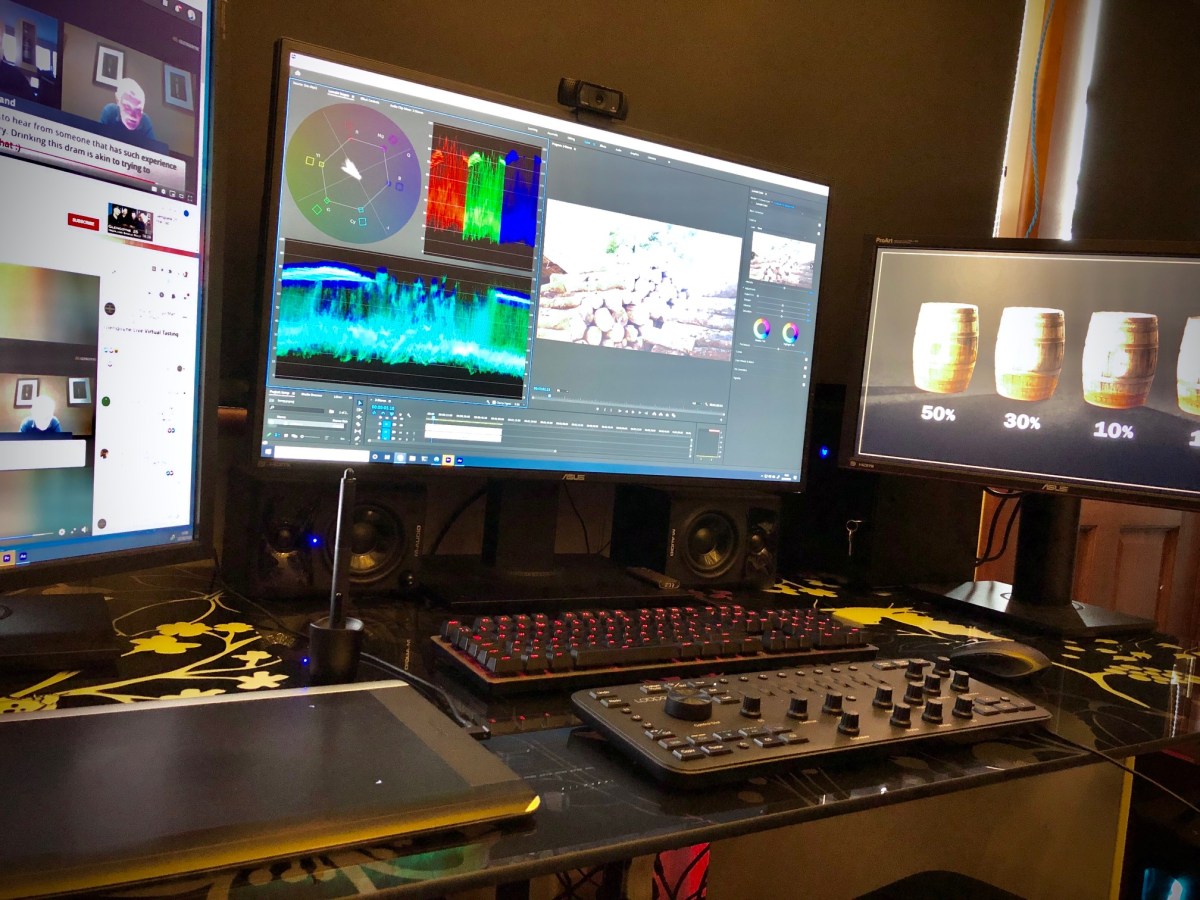
Running a live stream studio from home
Since the start of lockdown, many of our clients at Bright Signals have approached us for broadcast solutions. They need ways to keep in touch with their customers and stakeholders, and need to find digital alternatives to events that would normally happen in the real world. Fortunately, I already had a pretty comprehensive photo, video…

Making Edinburgh Gin's first TV campaign
Over the past few months, our team at Bright Signals has been busy creating Edinburgh Gin’s biggest ever advertising campaign. What started as a relatively straightforward proposal for a set of outdoor posters evolved into a comprehensive campaign including print, digital and prime-time television ads. The hero piece of the campaign is the 40-second TV…

Edinburgh Fringe 2019 creative
The Fringe is the world’s largest arts festival, with thousands of artists filling hundreds of venues in Edinburgh across the month of August. At Scots, we are so lucky to have it on our doorstep, and I’ve been a keen Fringe-goer since I was a child. It was therefore a huge thrill and privilege to…

Making an arcade machine accept bottle caps as currency
We got an interesting brief recently from our friends at Badaboom. They wanted to convert some sort of arcade machine to accept bottle caps rather than coins as currency. Various ideas were discussed for what that machine might be, and in the end they settled on “The Claw!!!” as it shall ever be known to…

Building a voice controlled drinks dispenser with Lego and Raspberry Pi
The last two weeks have been the not-quite-Easter Spring school holidays. That meant 16 days to fill with a tech-loving nine year old. We had plenty happening in the first week, but on the second week both my wife and I were back at work, so I got my son working on a project involving…

Futurising a retro vending machine
At Bright Signals we were recently commissioned by a client to create a prototype vending machine, incorporating touchscreen product selection and NFC-based payment tokens. The starting point for the machine was to be a late 90s-era Vendo vending machine which had seen better days. The machine had served over 15,000 cans over its career, but…

I'm now a drone pilot, too…
I’ve been flying drones as a hobby since 2012, starting with Parrot quadcopters like the AR Drone and more recently moving over to the DJI range. This year I took my UK commercial drone exams, consisting of both day and night theory classes and practical tests. I’ve passed all the exams, completed all the paperwork…
Upgrading an ioSafe Rugged Portable to 4TB
For a good few years I had a sideline in writing tech reviews for various Scottish newspapers. One of the products I was invited to review in 2011 was the Solo Pro hard drive from the disaster-proof specialists at ioSafe. I gave the Solo Pro a real hammering, figuratively and literally. First I subjected it…
Something went wrong. Please refresh the page and/or try again.
Follow My Blog
Get new content delivered directly to your inbox.
 Grant Gibson